hort answer: more than any other organ in your body. Johns Hopkins has identified more than 500 vital functions performed by the liver1. It filters every drop of blood leaving your stomach and intestines, produces bile to digest fats, stores and releases energy to keep your blood sugar steady, manufactures the proteins that let your blood clot, stores vitamins and minerals, removes bacteria from your bloodstream, and converts alcohol, medications and metabolic by-products into forms your body can safely eliminate.
It does all of this continuously, without a single sensation to tell you it is happening. Right now, as you read this sentence, your liver is doing dozens of jobs you will never feel.
That silence is the reason most people never think about their liver. It is also the reason it deserves more attention than it gets.
Where is your liver, and how big is it?
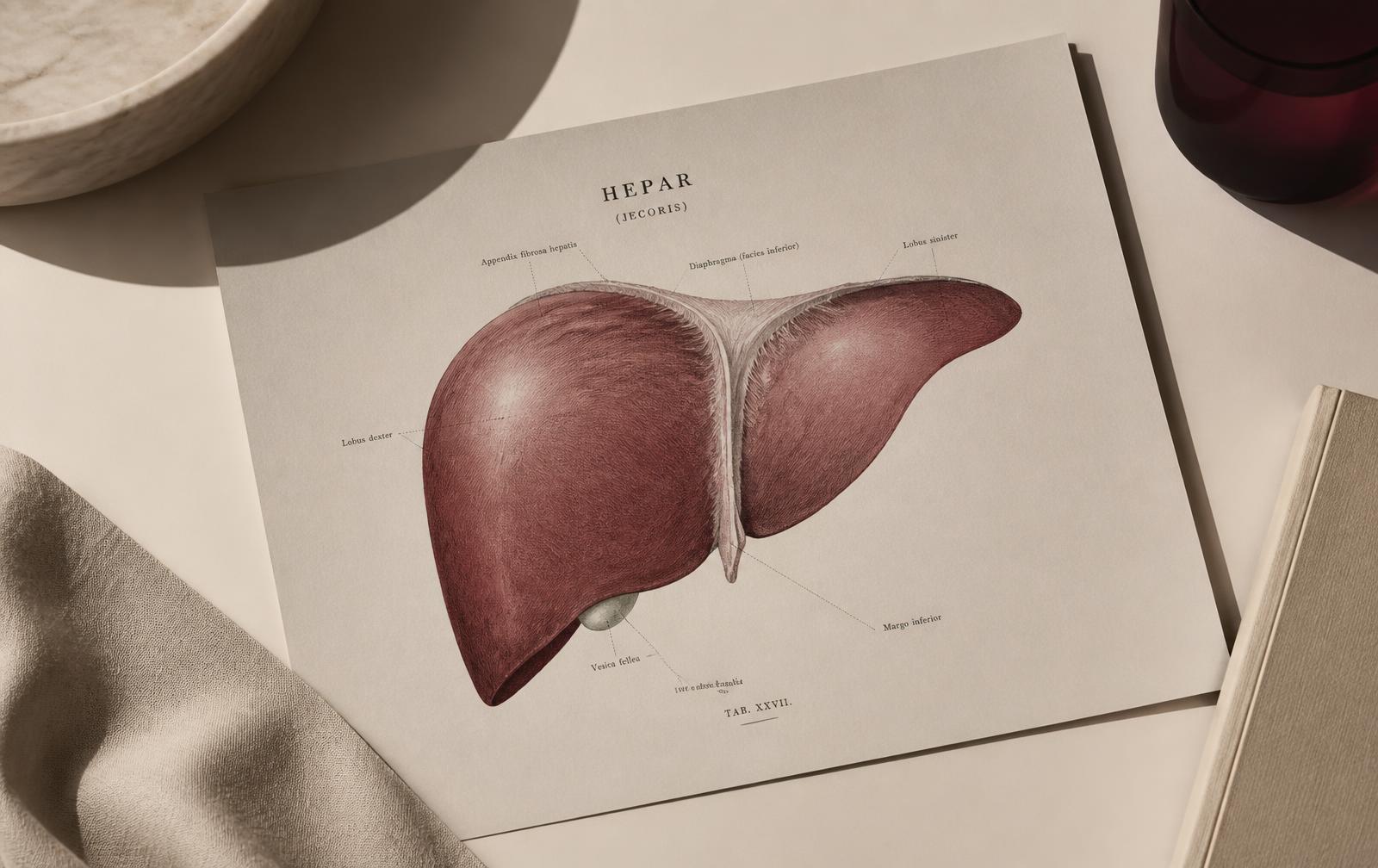
Your liver sits in the upper right side of your abdomen, just below the diaphragm and above your stomach. It weighs around three pounds, roughly the weight of a football, making it the largest internal organ in the human body4.
It is divided into four lobes, each made up of sections and thousands of smaller lobules where the actual work happens. What matters more than the anatomy is the plumbing: all the blood leaving your stomach and intestines passes through the liver before it goes anywhere else.
Think about what that means. Every meal, every drink, every medication, every supplement you have ever taken has been routed through your liver for inspection and processing before your body used any of it. It is the first and most important checkpoint in your entire metabolism.
What are the liver’s main jobs?
More than 500 functions is difficult to hold in your head, so here are the ones that matter most in daily life.
1. It filters your blood
The liver receives blood from the digestive tract and processes it, breaking down, balancing and creating nutrients before that blood continues to the rest of your body3. As part of that filtering, it also removes bacteria from the bloodstream, which makes it part of your immune defense as well as your metabolism.
2. It handles detoxification
When you take in a potentially toxic substance, such as alcohol or medication, your liver alters it into a form that can be removed from your body. It converts ammonia, a by-product of protein metabolism, into urea, which leaves in your urine. It clears drugs and other harmful substances from the blood.
Once the liver has broken something down, the by-products are excreted into bile or back into the blood. Bile by-products leave through the intestines. Blood by-products are filtered out by the kidneys and leave in your urine1.
This is the single most misunderstood fact about the liver, and it is worth stating plainly: detoxification is not something you add to your liver. It is what your liver is already doing.
3. It produces bile
Your liver continuously produces bile, a greenish-yellow fluid that breaks down fats so they can be digested and absorbed. It excretes roughly 500 to 1,000 milliliters of it every day, and about 95% of the bile that enters the intestine is reabsorbed and returned to the liver to be used again5.
Bile matters more than most people realize. Without adequate bile, you cannot properly absorb fat or the fat-soluble vitamins A, D, E and K. Bile is also the body's main route for eliminating cholesterol.
4. It manages your energy supply
The liver converts excess glucose into glycogen for storage, then converts it back into glucose and releases it when you need energy. This is how your blood sugar stays reasonably steady between meals rather than crashing the moment you stop eating.
That job puts the liver at the center of metabolic health, a connection we will come back to.
5. It manufactures essential proteins
Your liver produces albumin, the most common protein in blood serum, which carries hormones, drugs, vitamins and fatty acids around your body and keeps fluid from leaking out of your bloodstream into surrounding tissue. It also produces most of the substances that allow your blood to clot after an injury.
6. It stores what you need later
The liver holds significant reserves of vitamins A, D, E, K and B12, along with iron and copper, releasing them as your body requires them.
7. It processes bilirubin
When red blood cells break down, they produce bilirubin. The liver clears it. When that process fails and bilirubin accumulates, the skin and eyes turn yellow, which is jaundice, one of the few visible signs of liver trouble.
Why can’t you feel your liver working?
Because there is nothing to feel.
There is no sensation attached to bile production, glycogen conversion, albumin synthesis or the clearing of a medication from your blood. These processes are chemical, continuous and entirely silent. Unlike your gut, which announces itself constantly, or your heart, which you can literally feel beating, the liver gives you almost no feedback at all.
This has one uncomfortable consequence: liver conditions can develop for years without symptoms. You cannot use how you feel as a guide to how your liver is doing. Johns Hopkins hepatologists have made the point that you should not wait for symptoms to appear before paying attention to liver health2.
It also explains why this organ gets ignored. We have spent the last decade talking about gut health, largely because the gut is loud. It bloats, it cramps, it tells you when something is wrong. The liver does more work and says nothing, so it fell out of the conversation entirely.
At Holsom, this is the specific gap we exist to close. Not because your liver is in trouble, but because an organ running 500 processes a day should not be the one nobody thinks about.
Is the liver part of metabolic health?
Yes, and this is where the conversation is heading.
The liver stores and releases glucose, produces and clears cholesterol through bile, and processes fats. Those are not peripheral tasks, they are the core of metabolism. When people talk about metabolic health, insulin sensitivity, blood sugar regulation and fat handling, they are describing processes the liver runs.
This connection has become more visible as metabolic dysfunction-associated steatotic liver disease (MASLD), previously called fatty liver disease, has become widely recognized, and as GLP-1 medications have pushed metabolic health into mainstream conversation. Both point at the same organ.
The liver has been the missing piece in a conversation everyone is already having. Naming it is overdue.
Can your liver repair itself?
The liver is notable for its regenerative capacity, which is one of the reasons living-donor liver transplantation is possible. But regeneration has limits, and it is not a license for carelessness.
Sustained damage from alcohol, chronic disease or long-term metabolic dysfunction can lead to scarring and cirrhosis, and scarring is not something the liver simply undoes. This is why the useful strategy is not damage followed by repair, but consistent everyday care.
It is also why no supplement, including ours, should ever be sold as something that repairs or reverses liver damage. Any product making that claim is telling you something about itself, not about your liver. If you have concerns about liver damage, that is a conversation for a doctor, not a shopping decision.
How do you actually look after your liver?
The evidence-based fundamentals are unremarkable, and that is the point.
- Limit alcohol. Your liver processes every drink, and less is consistently better.
- Maintain a healthy weight. Obesity is a major driver of liver disease, particularly MASLD.
- Eat a balanced diet. Mediterranean-style eating patterns are commonly recommended for metabolic and liver health.
- Move regularly. Physical activity supports the metabolic processes the liver manages.
- Be thoughtful about what you put through it. Alcohol, medications and supplements are all processed by the liver.
- Get screened if you have risk factors. Since symptoms are unreliable, screening is how you actually find out.
None of these is a product, and any brand in this category that will not tell you so is not worth your attention. What a supplement can honestly do is sit alongside these fundamentals as one small, repeatable part of a daily routine. What it cannot do is replace them.
That distinction is the whole basis of how we built Holsom.
What this means in practice
The liver is not an organ you fix. It is an organ you look after, in the same unremarkable way you look after your heart or your teeth: consistently, without drama, and long before anything goes wrong.
The supplement industry has struggled with this, because “support something quietly for years” is a harder sell than “flush out your toxins this weekend.” So the category built itself around cleanses and resets, which the evidence does not support, rather than around the far less exciting truth that liver care is a daily habit.
We think the honest version of that is worth building. Your liver has been working every day of your life without asking for anything. Backing it up should be a normal part of a health routine, not an emergency response.
Frequently asked questions
How many functions does the liver perform?
More than 500 vital functions have been identified, including blood filtration, bile production, glucose storage and release, protein synthesis, vitamin and mineral storage, and processing of alcohol, medications and metabolic by-products.
Is the liver the same as the kidneys?
No, though they work together. The liver breaks substances down into forms that can be eliminated. The kidneys filter those by-products out of the blood so they leave in your urine. The liver processes, the kidneys excrete.
Where is the liver located?
In the upper right side of the abdomen, below the diaphragm. It weighs around three pounds and is the largest internal organ in the body.
Does the liver detox your body?
Yes, and this is the key point. Detoxification is a normal, continuous liver function. It is not something a product performs for you. Marketing that promises to "detox your liver" has the relationship backwards, since the liver is the organ doing the detoxifying.
How do I know if my liver is healthy?
Usually you cannot tell from how you feel, because the liver produces almost no symptoms until problems are advanced. Blood tests measuring liver enzymes and imaging are how this is actually assessed. If you have risk factors, ask a clinician rather than relying on how you feel.
Why is the liver connected to metabolic health?
Because it stores and releases glucose, processes fats and manages cholesterol through bile production. Blood sugar regulation and fat handling are liver functions, which puts the liver at the center of metabolic health.
Can you live without a liver?
No. Unlike a kidney, the liver has no substitute, and there is no long-term equivalent of dialysis for it. It is essential.
The bottom line
Your liver runs more than 500 processes a day and never once tells you about it. It filters everything you consume, produces the bile that lets you digest fat, keeps your blood sugar level, makes the proteins that let your blood clot, and handles the detoxification that an entire industry has tried to sell back to you in a bottle.
Your liver never needed cleansing. It has been doing that job your whole life. What it deserves instead is what any hardworking system deserves: not a dramatic intervention, but consistent, unglamorous, everyday care.
That is the organ we built Holsom for.
Who wrote this
This was written by the team building Holsom, a daily liver-support supplement launching soon.
We built Holsom because of everything above. The liver is the hardest-working organ in the body and the one the wellness industry either ignored or turned into a cleanse gimmick. Holsom is a focused daily formula for the organ already doing the work. It is not a cleanse, it is not a reset, and it will not promise you a feeling we cannot back up. Liver support is not something you feel, and we would rather say so than pretend otherwise.
Want the plain-English version of all this? We made a free 5-minute guide to liver health: what your liver actually does, what detox marketing gets wrong, and what daily support really means.
Citations
- Johns Hopkins Medicine, “Liver: Anatomy and Functions”: hopkinsmedicine.org
- Johns Hopkins Medicine, “Liver Health”: hopkinsmedicine.org
- Johns Hopkins Medicine, “The Digestive Process: The Liver and its Many Functions”: hopkinsmedicine.org
- Johns Hopkins Pathology, “Anatomy and Physiology”: pathology.jhu.edu
- Columbia Surgery, “The Liver and Its Functions”: columbiasurgery.org
Written by
The Holsom Team
Editorial, Holsom
We research and write everything published here, working only from primary clinical literature and guidance from major medical institutions. We name the limits of the evidence, including where it runs against our own product.
This article is for general education and is not medical advice. It is not intended to diagnose, treat, cure, or prevent any disease. Speak with a qualified healthcare professional about your own liver health, especially before starting any supplement.